Earwax Removal
Helping You Hear It All – Since 1985
Cerumen, also known as earwax, is naturally produced by the glands in the ears to lubricate the ear canals and keep dust and debris from getting too far down in the ear canal.
Cerumen typically clears itself from the ears, but in some instances can accumulate and cause a blockage, especially if you wear earmolds or hearing aids.
Symptoms of a cerumen blockage include:
- Earache
- Tinnitus (ringing of the ears)
- Decreased hearing
- Feeling of ear fullness
- Dizziness
If a blockage occurs, it may need to be removed. This can be done at home or at your hearing care professional’s office, depending on the size and severity of the blockage.
The Earigator™ Cleaning Instrument
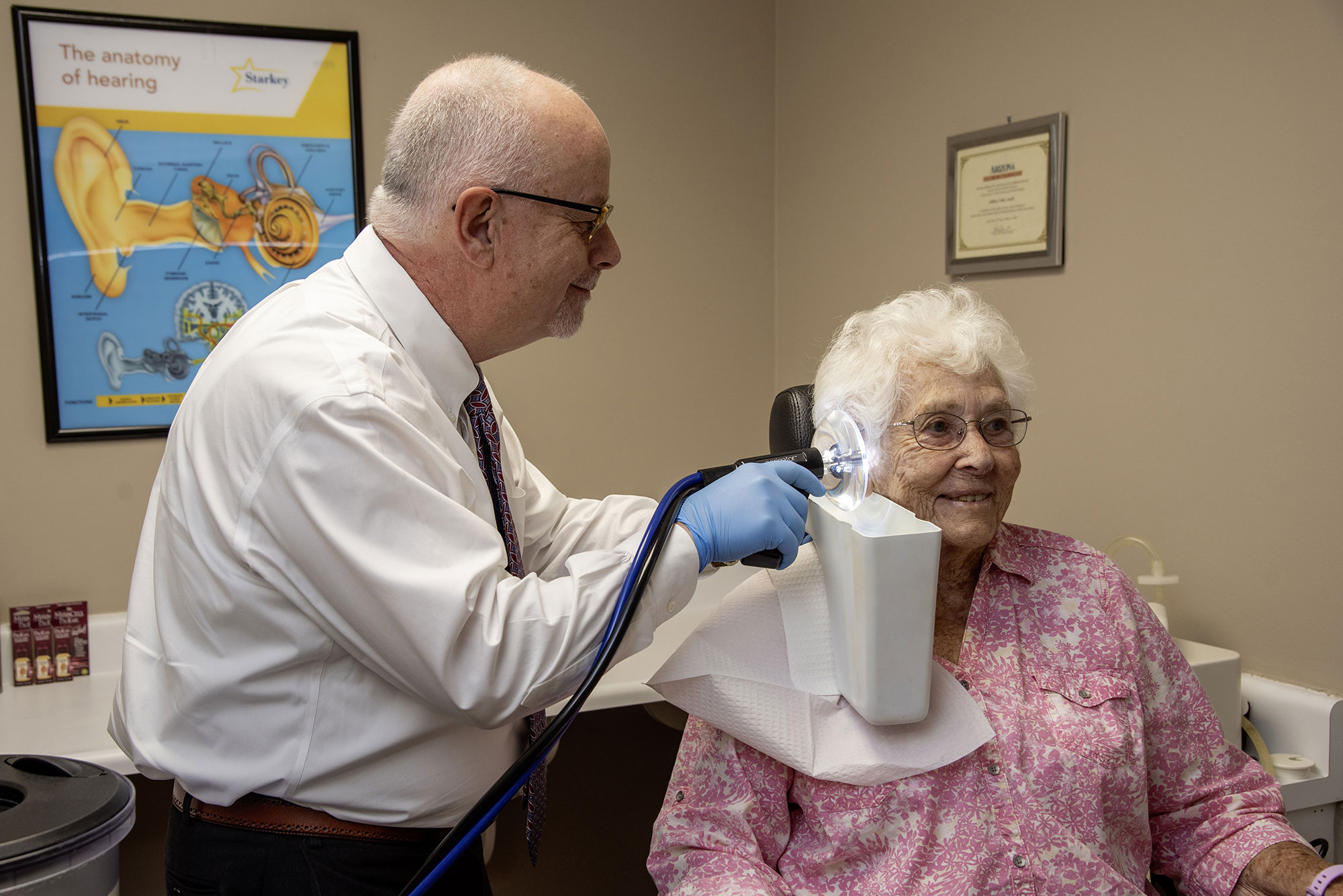
Experience the unparalleled safety, efficiency, and control of the EARIGATOR™, a revolutionary ear cleansing instrument designed for superior ear wax removal. Unlike conventional methods, the EARIGATOR™ utilizes a precisely controlled stream of warm water to gently and effectively remove stubborn ear wax without causing irritation or discomfort.
Benefits:
- Safe and gentle on sensitive ear canals
- Effective and thorough ear wax removal
- Superior control over water temperature, pressure, and flow rate
- Custom catch basin for mess-free operation
Earwax removal methods to avoid
People commonly use cotton swabs to try and remove earwax or dislodge a blockage. However, this can sometimes cause more problems as cotton swabs may push the blockage further down into the ear canal, risking even more damage to the ear.
Cotton swabs themselves can also be accidentally inserted too far into the ear canal and can compact wax further or puncture your eardrum.
Physicians generally agree that cotton swabs are a bad idea for removing earwax and should only be used on the outer portions of your ear. You should never insert cotton swabs or any small object into your ear canal.
Contact Us
Two Convenient Locations, One Commitment to Better Hearing
At Hear All Hearing Center, we make it easy to get the care you deserve. With offices in both Dayton and Mason, we’re right where you need us—whether you’re just beginning your hearing journey or looking to upgrade your current devices.